
NXP SPC5743RK1MLU5: A High-Performance 32-Bit MCU for Automotive Safety and Powertrain Systems
The rapid evolution of automotive electronics demands microcontrollers that deliver not only high computational performance but also exceptional reliability and safety. The NXP SPC5743RK1MLU5 stands out as a premier 32-bit MCU specifically engineered to meet the stringent requirements of modern automotive safety and powertrain applications. This powerful microcontroller integrates advanced processing capabilities, robust safety mechanisms, and extensive connectivity options, making it a cornerstone for next-generation vehicle systems.
At the heart of the SPC5743RK1MLU5 lies a high-performance e200z4 dual-core Power Architecture® processor, capable of operating at speeds up to 120 MHz. This dual-core design enhances processing throughput and enables lockstep operation, where both cores execute the same instructions simultaneously. By comparing the outputs in real-time, the MCU can detect and respond to potential faults immediately, a critical feature for functional safety. This architecture ensures compliance with ISO 26262 ASIL-D, the highest Automotive Safety Integrity Level, making it suitable for systems where failure could have severe consequences.
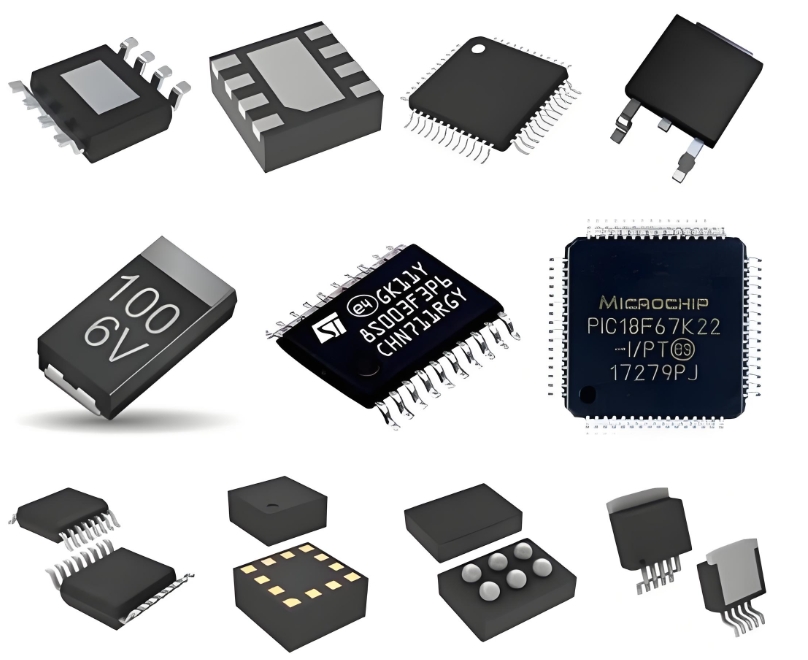
The microcontroller is further fortified with a comprehensive suite of safety features. It includes built-in self-test (BIST) logic for RAM, flash memory, and core logic, along with error-correcting code (ECC) for both flash and RAM. A dedicated Safety Management Unit (SMU) monitors the system’s state and can trigger predefined responses to faults, such as resetting the core or generating interrupts. These mechanisms provide a proactive approach to fault detection and handling, which is indispensable for critical applications like electric power steering, braking systems, and airbag control.
For powertrain systems, which encompass engine management, transmission control, and hybrid/electric vehicle propulsion, the SPC5743RK1MLU5 offers exceptional computational muscle and specialized peripherals. It features high-resolution timers, advanced analog-to-digital converters (ADCs), and flexible communication interfaces like CAN-FD (Flexible Data-Rate) and Ethernet. These peripherals enable precise control of actuators and sensors, efficient data acquisition, and seamless communication with other electronic control units (ECUs) within the vehicle network. The MCU’s robust design ensures reliable operation even under the harsh environmental conditions typical of automotive under-hood applications, including extended temperature ranges and significant electrical noise.
Beyond safety and powertrain, its versatility extends to chassis and safety domain control. With its powerful cores and large memory footprint (up to 3MB of flash and 256KB of RAM), it can consolidate multiple functions onto a single chip, reducing system complexity and cost.
ICGOOODFIND: The NXP SPC5743RK1MLU5 is a benchmark for automotive MCUs, masterfully combining raw processing power with an uncompromising safety architecture. It is an optimal choice for developers building systems that demand the highest levels of reliability, performance, and functional safety certification.
Keywords: Automotive Safety, Powertrain Systems, ASIL-D, Dual-Core Lockstep, Functional Safety

