
**A Monolithic Microwave IC: Exploring the HMC1105's Role in Modern RF Systems**
The relentless drive towards higher frequencies, greater integration, and enhanced performance in wireless technology is fundamentally powered by advancements in semiconductor design. At the heart of this evolution lies the **Monolithic Microwave Integrated Circuit (MMIC)**, a type of integrated circuit that operates at microwave frequencies. Among the vast array of MMICs available, the **HMC1105 from Analog Devices** stands out as a quintessential component, exemplifying the critical role these devices play in shaping modern RF systems.
A MMIC integrates all components—transistors, diodes, resistors, capacitors, and transmission lines—onto a single semiconductor substrate, typically Gallium Arsenide (GaAs) or Gallium Nitride (GaN). This monolithic approach is a stark contrast to hybrid circuits, where discrete components are connected on a carrier substrate. The primary advantage is **superior high-frequency performance**, minimized parasitic effects, and **greatly enhanced reliability**. The HMC1105, built on a GaAs process, is a premier example of this technology, engineered to deliver exceptional performance from DC to 20 GHz.
The HMC1105 is a distributed power amplifier MMIC designed for a broad range of applications. Its significance is underscored by several key characteristics that make it indispensable to RF engineers. **Its ultra-wideband performance** allows a single component to be utilized across multiple frequency bands, simplifying design and reducing the bill of materials in complex systems. Furthermore, it provides **high output power and gain**, delivering up to +27 dBm of output power and 13 dB of gain, which is crucial for driving subsequent stages in a transmitter chain or boosting weak signals in a receiver.
The applications of the HMC1105 are as diverse as they are critical. It is a workhorse in:
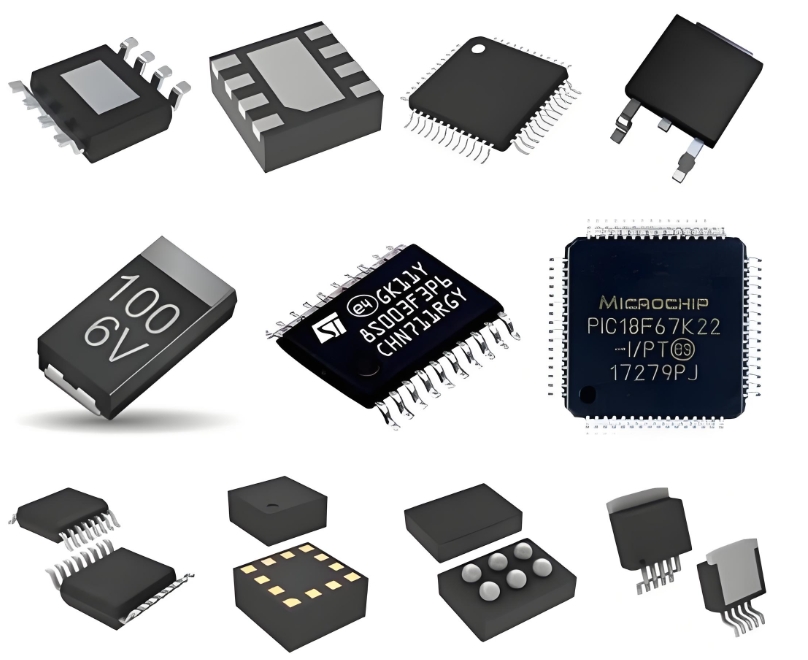
* **Test and Measurement Equipment:** Serving as a key gain block in signal generators, spectrum analyzers, and broadband test systems where signal integrity and wide bandwidth are paramount.
* **Electronic Warfare (EW) and Radar Systems:** Its wide instantaneous bandwidth is essential for jamming, signal intelligence (SIGINT), and multi-function radar systems that must operate across a wide frequency spectrum.
* **Fiber Optic and Telecommunications Infrastructure:** Amplifying signals in high-speed data links and 5G millimeter-wave base stations that require linearity and power across multi-gigahertz channels.
The integration of a component like the HMC1105 directly translates to **reduced system size, weight, and power (SWaP)**—a critical metric for aerospace, defense, and portable instrumentation. By replacing multiple narrower-band amplifiers with a single, robust MMIC, designers can create more compact, efficient, and cost-effective systems without sacrificing performance.
**ICGOODFIND**: The HMC1105 MMIC is a testament to the power of integration at microwave frequencies. It empowers the design of next-generation RF systems by providing a robust, high-performance, and wideband amplification solution that is fundamental to the advancement of telecommunications, defense electronics, and test instrumentation.
**Keywords**: MMIC, Wideband Amplifier, GaAs, RF Systems, High Frequency

